Yangjae Flower Market: A Foreigner's Guide to Seoul's Biggest Flower Wholesale Market (2026)
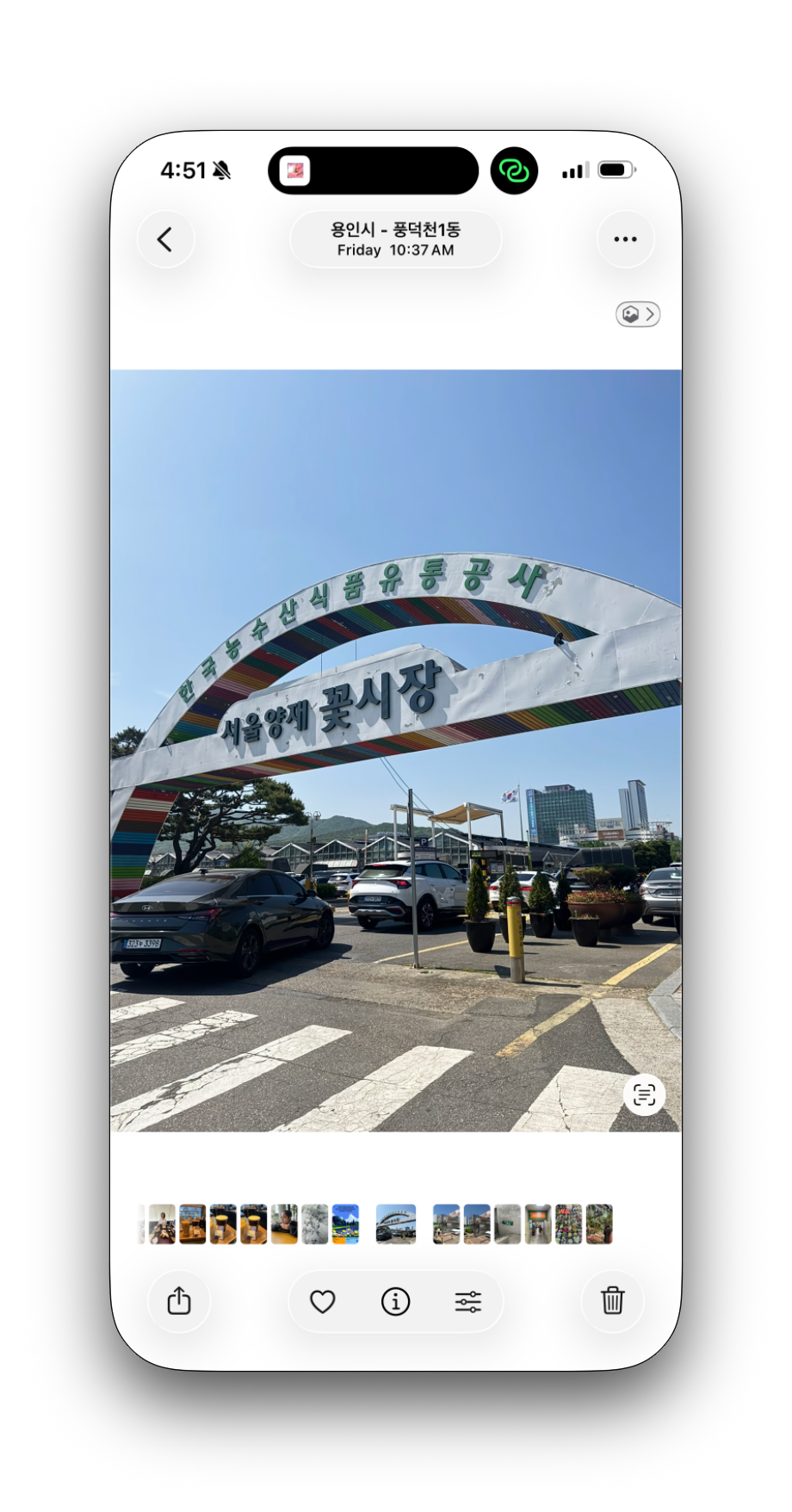
Korea's largest flower market is hiding in plain sight in southern Seoul — and it's where every florist, café, and flower-loving expat in the city actually shops. Here's how to use it like a local.
If you've ever bought flowers from a Seoul florist and gasped at the price — a small bouquet for ₩40,000, a single bunch of tulips for ₩25,000 — there's a reason. Most of those florists bought their flowers that same morning at Yangjae.
Yangjae Flower Market (양재 꽃시장) is Korea's biggest flower wholesale market. It's where the city's florists, hotels, café owners, and event planners source their flowers, and the prices reflect it. A bundle of roses that costs ₩30,000 in Hannam will run you ₩7,000 here. A potted plant that sells for ₩40,000 in a cute Seongsu plant shop? ₩8,000 at Yangjae.
The catch: it's not really set up for foreigners. The signage is mostly in Korean, the wholesale hours are confusing, and if you show up at the wrong time you'll find half the market closed. This post is the guide I wish someone had written for me the first time I went.
[PHOTO: wide shot of the market — the entrance or the main potted plant area is great here]
Why Yangjae Is Worth the Trip
There are a few flower markets in Seoul, but Yangjae is the one. It's the one where wholesale auctions actually happen, where serious florists shop, and where the variety is unmatched.
What you'll find here:
Fresh cut flowers — roses, tulips, peonies, lisianthus, freesia, and dozens of varieties most foreigners have never seen. Bunches start around ₩5,000–₩10,000.
Potted plants — from ₩2,000 succulents to massive ₩100,000+ statement plants. Monstera, fiddle leaf figs, orchids of every kind, indoor trees, hanging plants, herbs.
Trees and outdoor plants — full-size trees, bonsai, garden plants, seasonal bedding flowers.
Floral supplies — vases, ribbons, wrapping paper, foam, ceramics. The second floor is a fantasy if you've ever tried to wrap your own bouquet.
Dried and preserved flowers — increasingly trendy in Korea right now. Yangjae has the best selection in Seoul.
When to Go (This Is the Most Important Part)
Yangjae is technically open from before dawn to evening, but the market you experience completely depends on when you arrive. Get this wrong and you'll have a frustrating trip.
The market has different sections with different hours, but here's what you need to know as a regular customer:
Cut Flower Wholesale Building (생화 도매시장 / 1st floor)
- Open: Monday–Saturday, midnight to 1 PM
- Closed Sundays
- Wholesale-only until 10 AM, open to general public 10 AM–1 PM
- Best time for foreigners: 10 AM–noon, Tuesday–Friday
Floral Supplies (조화/부자재 / 2nd floor)
- Open: Monday–Saturday, midnight to 3 PM
- Closed Sundays
Potted Plants Greenhouses (분화온실 / Buildings 가 and 나)
- Open: 7 AM–7 PM daily
- One greenhouse closes Sundays, the other stays open (they alternate)
- Best time: anytime during opening hours, but mornings are calmest
The mistake almost every foreigner makes: showing up Sunday afternoon hoping to buy cut flowers. The cut flower building will be closed. You'll only have access to potted plants.
The sweet spot for a first visit is a weekday morning, between 10 AM and noon. The wholesale rush is over, vendors aren't stressed, and everything is open.
What to Buy at Each Section
The market is huge — over 400 vendors across multiple buildings. Without a plan you'll just wander. Here's what each area is actually for.
The Cut Flower Wholesale Building (1st Floor)
This is the iconic part of the market — the buckets-everywhere, smell-of-fresh-flowers, warehouse aesthetic. Each vendor specializes in something: roses, lilies, chrysanthemums, peonies, imports.
What to buy here: fresh cut flowers in bulk. Bunches not single stems. Most vendors won't sell you 3 roses — they'll sell you a bundle of 10 or 20. That's how the price stays low.
A few tips:
- Walk the entire floor before buying. Prices vary, and the best-looking flowers are often hidden in vendors at the back.
- "Discounts at closing time" is real — show up around 12:30 PM and you can get end-of-day deals, especially on flowers that won't last another day.
- Bring cash or have Korean bank transfer ready. Many smaller vendors prefer it, though most accept cards now.
The Floral Supplies Floor (2nd Floor)
If you're DIY-ing a bouquet, hosting an event, or just love crafty things, this floor is dangerous. Wrapping paper in every color, ribbons by the meter, glass vases, ceramic pots, foam, wire, dried flowers, candles, gift boxes.
Pricing here is genuinely cheap — wrapping paper that costs ₩3,000 for a single sheet at Daiso is ₩500–₩1,000 here.
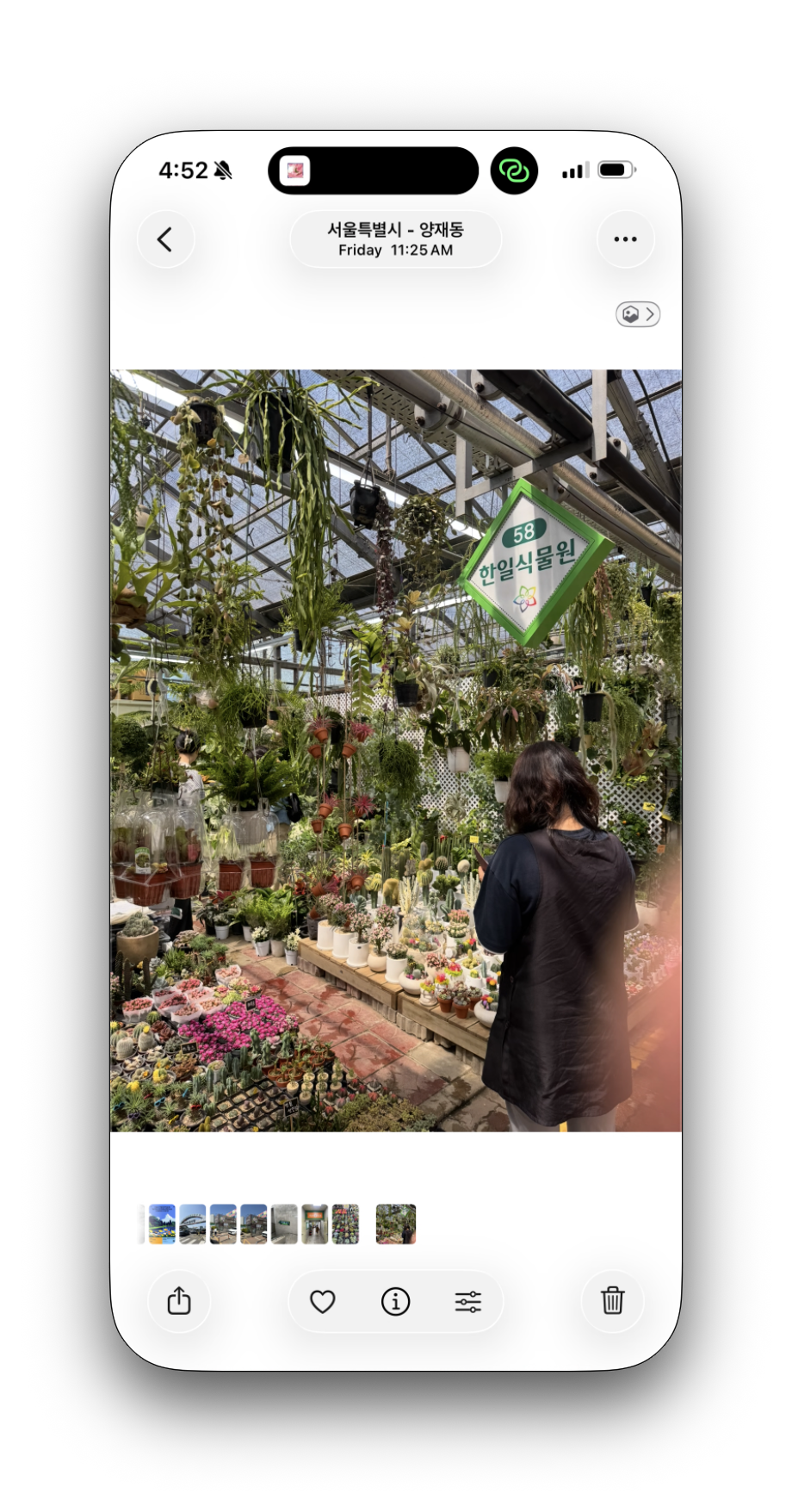
The Potted Plant Greenhouses (가/나 Buildings)
This is where I send every friend who asks me where to buy plants in Seoul. The two huge greenhouse buildings — labeled 가동 and 나동 — are connected and packed with potted plants.
What you'll find:
- Indoor plants: monstera, pothos, philodendron, rubber plants, palms, ficus
- Orchids: the variety here is unreal, both Korean and Southeast Asian imports
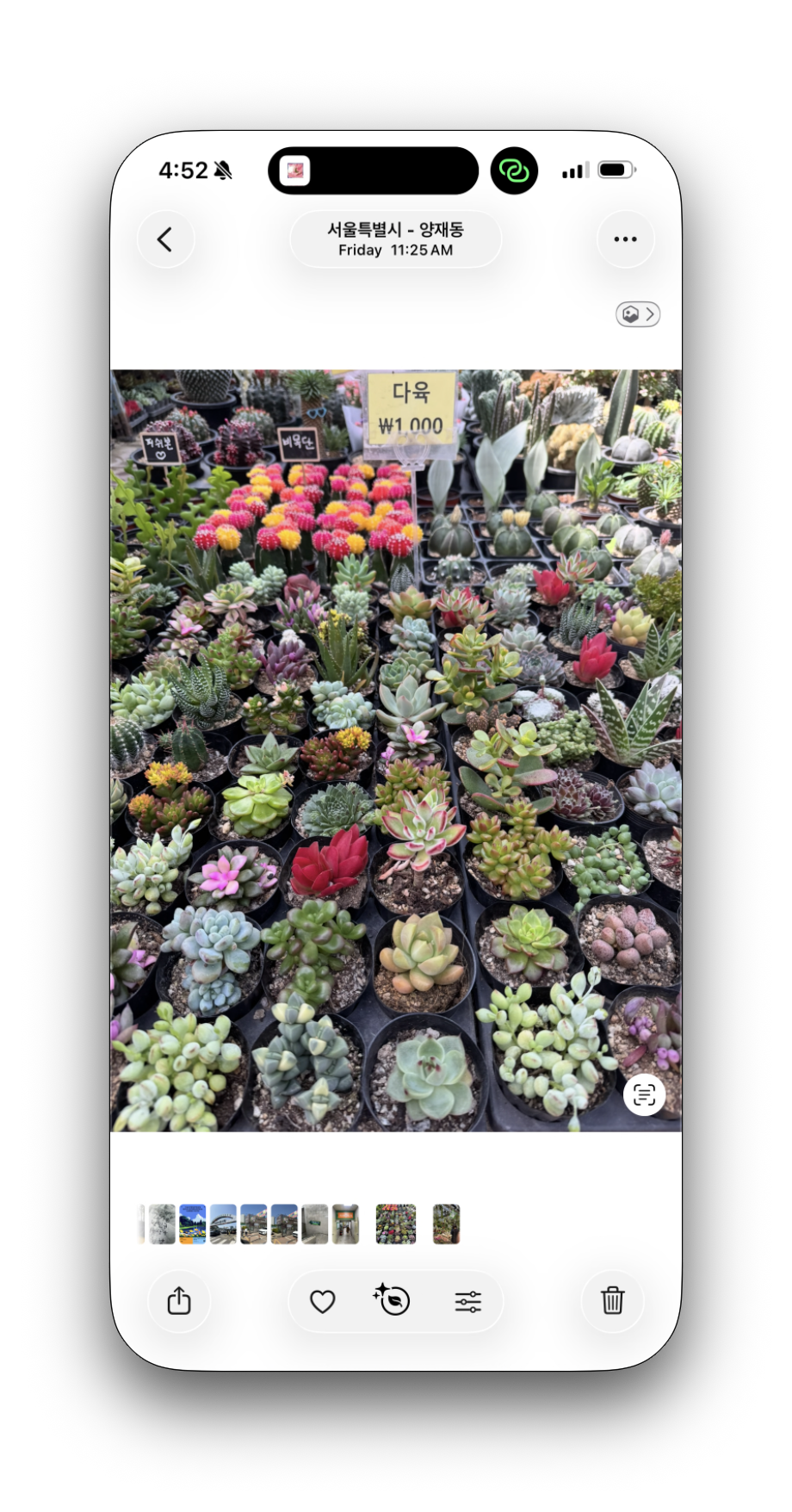
- Succulents and cacti: entire shops dedicated to them, often ₩2,000–₩5,000
- Herbs: basil, mint, rosemary, perilla — perfect for veranda gardening
- Seasonal bedding plants: what's in stock depends entirely on the month
Plants are cheaper here than literally anywhere else in Seoul, and the vendors will repot them for you on the spot if you buy a pot from them too.
Tree Market (Outdoor)
Toward the back of the complex, you'll find the tree and outdoor plant area. Unless you have a yard, balcony, or rooftop in Korea (rare for foreigners), you can probably skip this section. But it's worth a walk-through just to see — Koreans take their tree-shopping seriously.
Realistic Prices (As of May 2026)
To give you a sense of what to expect:
- Bundle of roses (10 stems): ₩7,000–₩15,000 depending on variety
- Bundle of tulips (10 stems): ₩8,000–₩12,000 in season
- Peonies (in season — May/June): ₩15,000–₩25,000 per bundle
- Small succulent in pot: ₩2,000–₩5,000
- Medium monstera (60cm): ₩15,000–₩25,000
- Large indoor tree (1m+): ₩40,000–₩100,000
- Orchid plants: ₩10,000–₩50,000 depending on size and variety
- Pre-made bouquet (in the basement bouquet shops): ₩15,000–₩40,000
For comparison, the same items at a regular Seoul florist would be 2–4x these prices.
How to Shop When You Don't Speak Korean
Most vendors at Yangjae speak little to no English. This is rarely a problem because flower shopping is mostly visual, but here are tips that have served me well:
Use Papago for the actual conversation. Not Google Translate — Papago is built for Korean and handles plant/flower vocabulary better. Have it open and ready.
Point and ask "얼마예요?" (eolmayeyo? — "how much?"). This is the only Korean phrase you really need. Vendors will type the price into a calculator if needed.
Bargaining is light. This isn't Namdaemun. Prices are mostly fixed, but if you're buying multiple things from the same vendor, asking "할인 돼요?" (halin dwaeyo? — "any discount?") sometimes gets you 1,000–2,000 won off or a free extra stem.
Know what you want before you go. "Pretty pink flowers" is harder to communicate than "peonies" (작약 / jakyak) or "ranunculus" (라넌큘러스 / raneonkyulleoseu). Save the Korean names of flowers you like in your phone.
Buying potted plants? Ask "분갈이 돼요?" (bun-gari dwaeyo? — "can you repot it?"). Most vendors will repot a plant for free or for ₩1,000–₩3,000 if you buy the new pot from them.
How to Get to Yangjae Flower Market
The market's full Korean name is 양재 꽃시장 or 양재 화훼공판장. Either works for navigation.
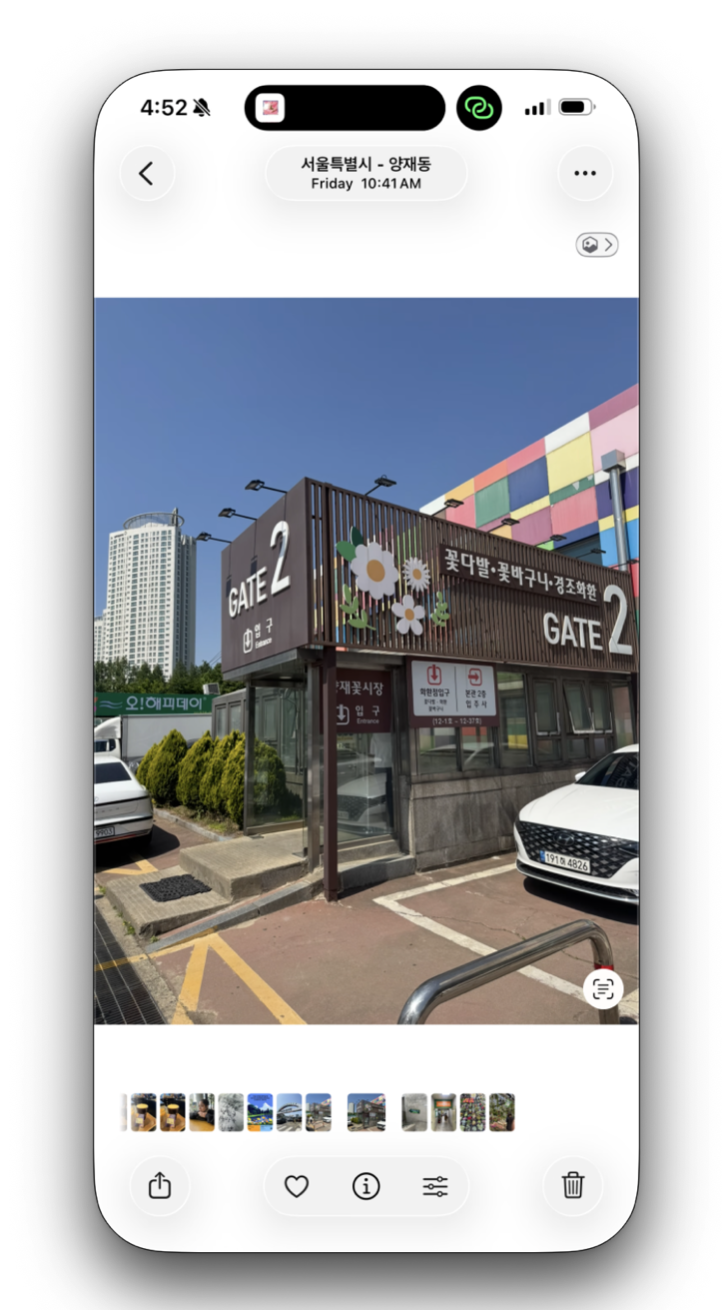
Address: 27 Gangnam-daero, Seocho-gu, Seoul (서울특별시 서초구 강남대로 27)
By Subway (Easiest)
- Take the Sinbundang Line (red line) to Yangjae Citizens' Forest Station (양재시민의숲역)
- Take Exit 4 — you'll see the market complex within 50 meters on your right
- Note: this is the Sinbundang Line, NOT Line 3's Yangjae Station. They are different stations. Going to "Yangjae Station" instead of "Yangjae Citizens' Forest Station" is the most common mistake.
By Bus
Multiple buses stop at "양재꽃시장" (Yangjae Flower Market) — check Naver Map for the route from your location.
By Car
There's a paid parking lot on-site. ₩1,000 for the first hour, then by the 15-minute increment after. If you spend over ₩60,000 at the market, you get 1 free hour of parking — keep your receipts.
A note on navigation: Don't try to use Google Maps for this. Korea's mapping system runs on Naver Map and Kakao Map, and the search results for "Yangjae Flower Market" on Google will be incomplete. We covered exactly why in our Naver Map vs Google Maps guide — short version: download Naver Map before you go.
What I'd Tell a Friend Going for the First Time
If a friend texted me asking how to do Yangjae right, this would be my reply:
- Go on a weekday morning, 10 AM–noon. Skip Sundays unless you only want plants.
- Eat first. The market is huge and there's not much food inside. Maeheon Citizens' Forest is right next door — grab a coffee or something at one of the cafés near the station before you go in.
- Bring a big tote bag or two, or be ready to carry a bouquet awkwardly on the subway home (we've all done it).
- Walk through everything once before buying anything. Prices and quality vary widely between vendors.
- Cash isn't required but is appreciated. Most vendors take cards now, but small purchases under ₩10,000 sometimes hit a card minimum.
- If you're nervous about transporting plants home on the subway, ask the vendor about delivery — many offer same-day Seoul delivery for ₩5,000–₩15,000.
Best Time of Year to Go
Yangjae is open year-round, but if you want a peak experience:
- March–May (spring): the absolute best time. Peonies, tulips, ranunculus, freesia, lilac, hydrangea — everything is in season and prices are at their best. Right now is the moment.
- September–October (fall): chrysanthemums, dahlias, and Korea's gorgeous autumn flower scene
- December: Christmas trees, poinsettias, and year-end gift bouquets
- January–February: quietest period. Variety drops and the cold makes carrying plants home a pain.
For an expat building a flower habit, start now. May is when Yangjae feels most magical.
Combine Yangjae With...
The market is in southern Seoul, slightly off the main tourist path, but it's surrounded by underrated spots:
- Maeheon Citizens' Forest (양재시민의숲) — a beautiful park literally next to the station. Take your flowers and go for a walk. May is gorgeous here.
- Seoul Arts Center (예술의전당) — 10 minutes by taxi. Concerts, exhibitions, and the iconic round opera house.
- Gangnam neighborhoods — the market is a short subway ride from Gangnam if you want to combine it with shopping or dinner.
FAQ
Is Yangjae Flower Market free to enter? Yes. There's no admission fee. You're just walking around a wholesale market.
Do I have to buy in bulk? For cut flowers, yes — vendors sell by the bundle, not by the stem. For potted plants, no — single plants are fine.
Can I bring plants on the subway? Yes, no problem. You'll see Koreans doing it constantly, especially on weekends.
Will vendors deliver to my apartment? Many will, especially for larger purchases. Ask "배달 돼요?" (baedal dwaeyo? — "do you deliver?"). Same-day Seoul delivery is usually ₩5,000–₩15,000.
Are credit cards accepted? Most vendors accept cards now, but bring some cash for small vendors and minimum-purchase situations.
Is there food at the market? Very limited. There's a small food court area but it's basic. Eat before or after.
Can I take photos? Yes, freely. Vendors are used to it. Just be polite — ask before getting too close to a specific shop's display.
The Bottom Line
If you live in Korea and you've never been to Yangjae, you're missing the cheapest, freshest, most varied flower shopping in the country. The first visit is a little overwhelming. The fifth visit, you'll have your favorite vendors, know what's in season, and start buying flowers for your apartment every week — because at these prices, why wouldn't you?
Show up on a weekday morning, walk it slowly, and let yourself fall for the place. Spring is the moment. Go before peonies leave.
Have a Yangjae tip we missed, or a favorite vendor? Email us at hello@konnectinkorea.com — we read everything.
For more honest guides to living in Korea, browse our Living in Korea section or subscribe to the newsletter.